ORBITAL
Orbital is an immersive installation centred on the levitation of a 5 metre diameter inflated sphere. The sphere is suspended mid-air by harnessing Bernoulli's Principle - a phenomenon in fluid dynamics whereby a controlled jetstream of air pressure holds the object aloft, seemingly defying gravity. The sphere oscillates, weaves, and trembles within the airstream.
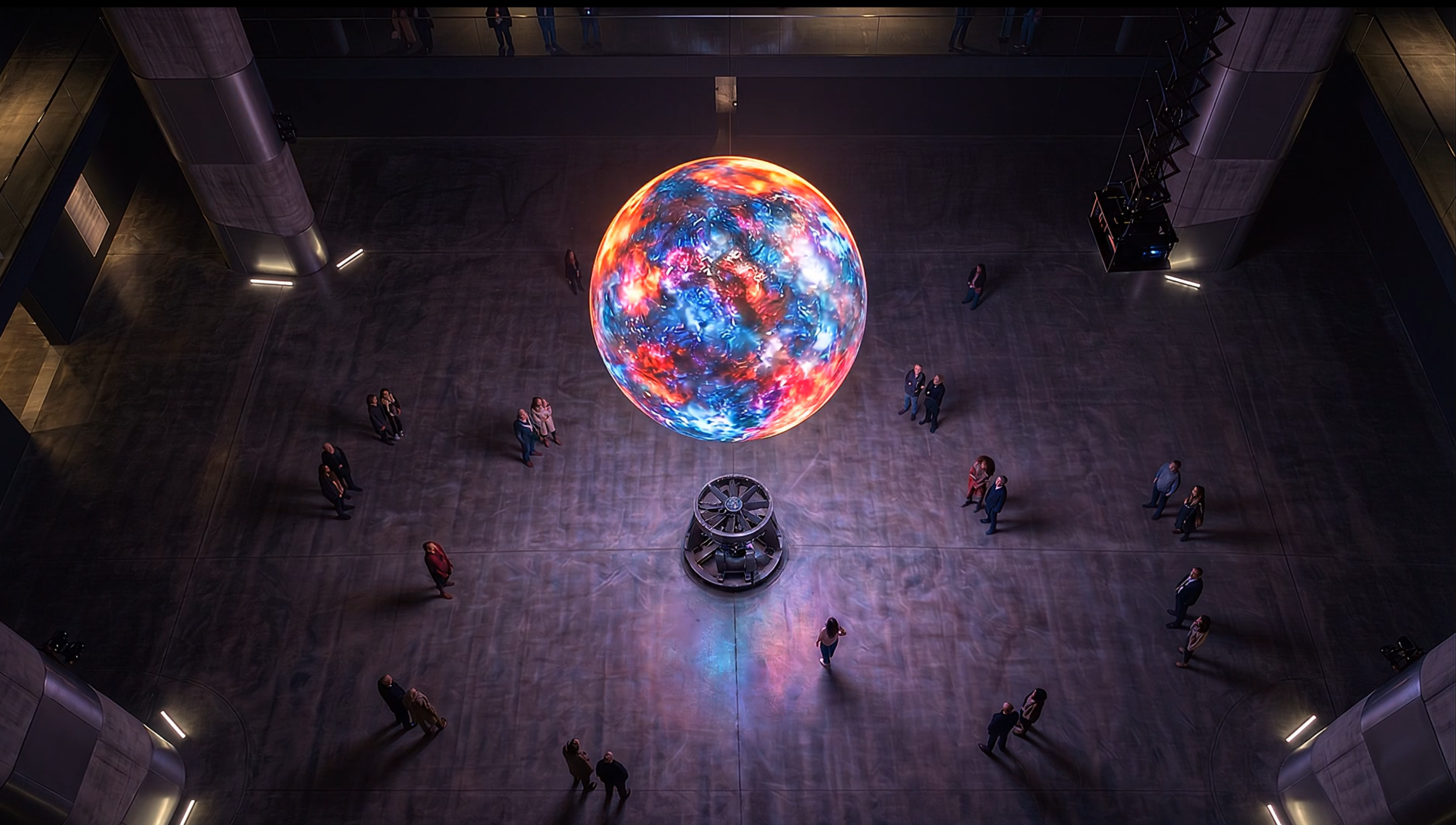
HOVER test
Four video projectors map real-time generative visuals onto the sphere's surface. A camera-based motion tracking system continuously monitors the sphere's subtle movements and adjusts the projection mapping accordingly, locking the digital imagery to the sphere’s surface so that it appears as a seamless, luminous skin. This fusion of physical instability and computational precision is central to the work's investigation: the tension between natural forces and machine intelligence.
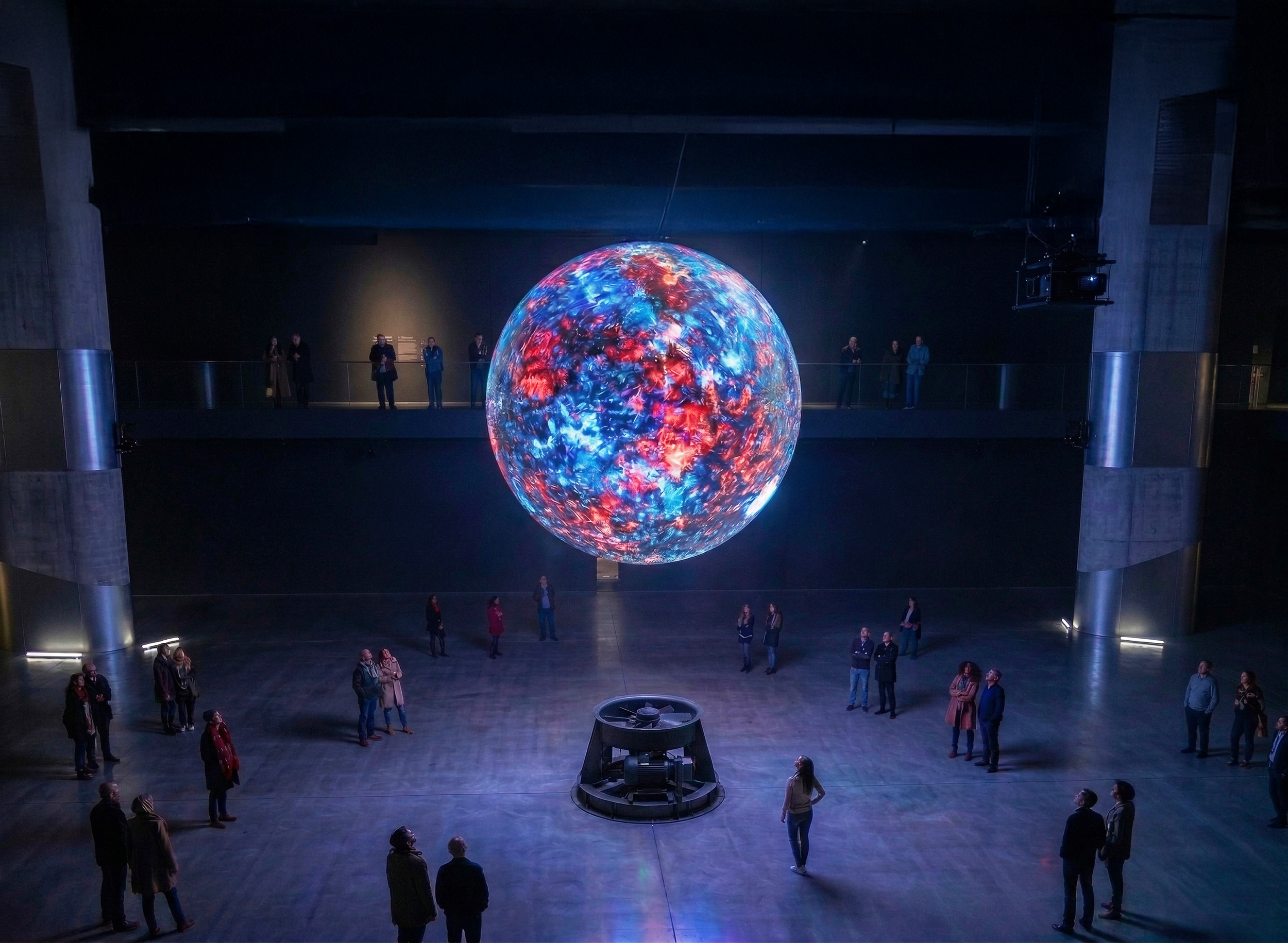
SIDE ELEVATION
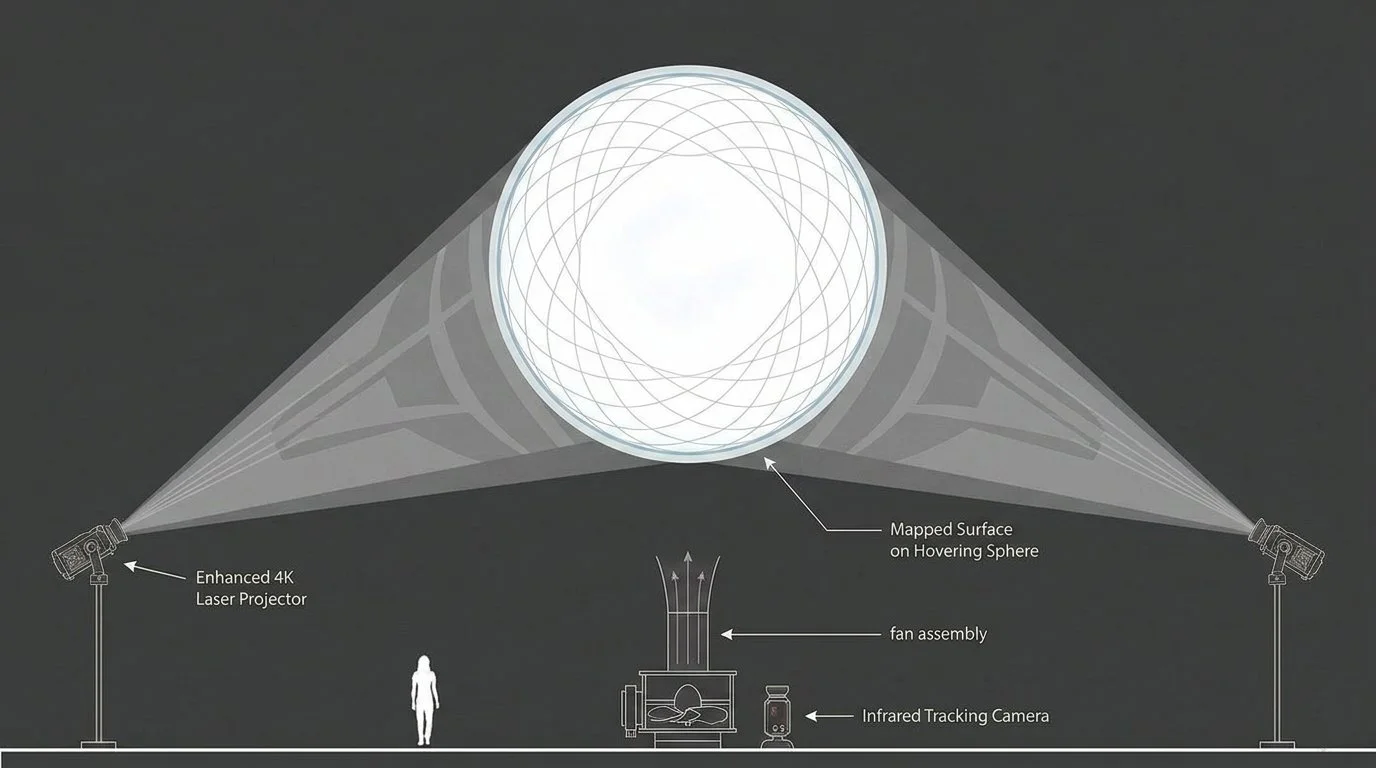
PLAN VIEW
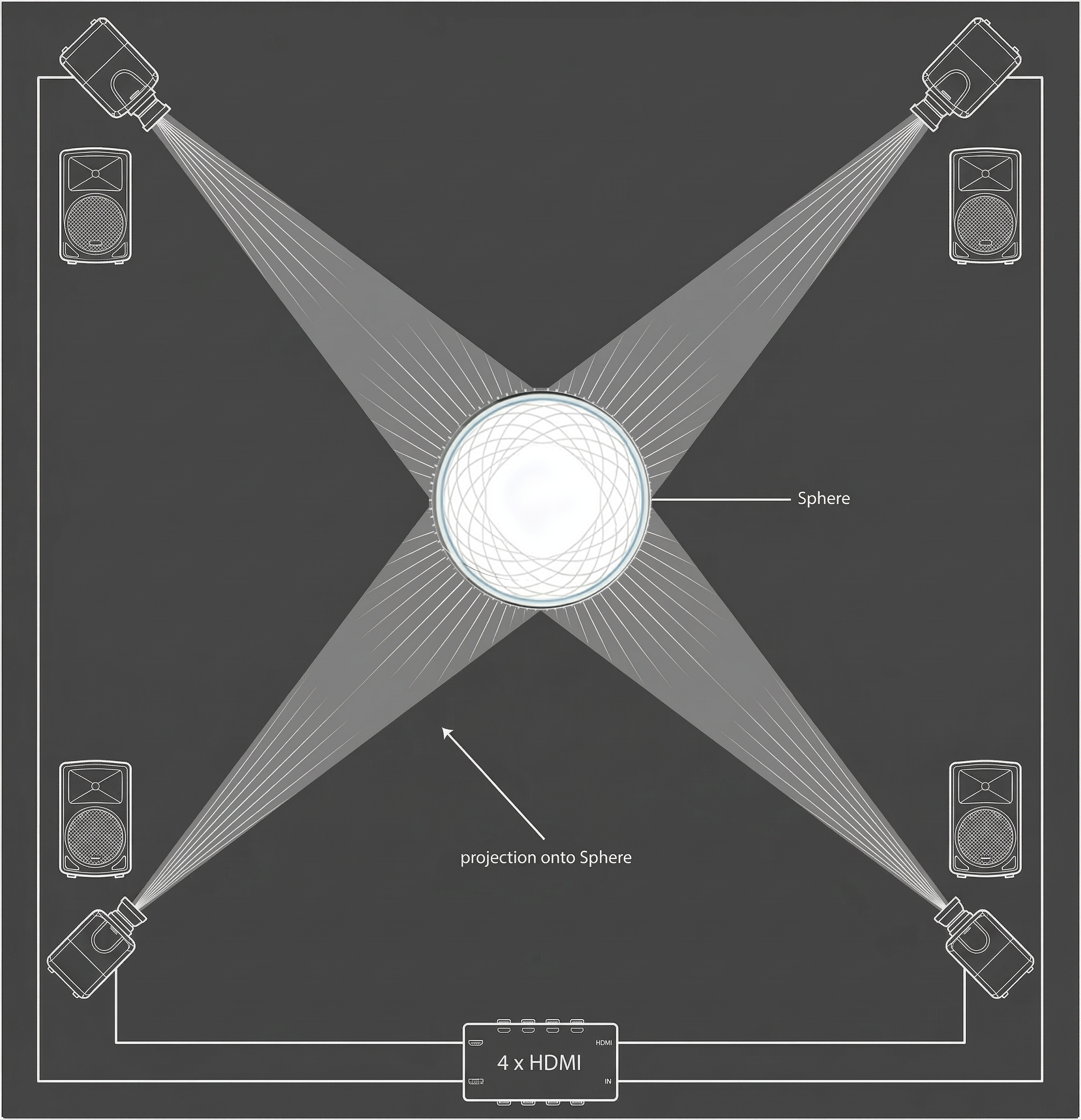
The projected content unfolds as a slow narrative arc. It begins at the quantum scale - depicting subatomic particles, interference patterns, and molecular formations - before transitioning through sequences of geometric line work and procedural graphics that systematically subdivide and analyse the sphere's surface. These sequences evoke the aesthetics of machine perception: a system scanning, measuring, and decoding the dimensions of the object it inhabits. The arc culminates at the cosmic scale, with planetary surfaces, atmospheric phenomena, and celestial bodies enveloping the sphere. The implication is one of emergence - from particle to planet, from raw data to sentient awareness.
The accompanying sound design mirrors this trajectory. Lush, meditative ambiences give way to percussive, algorithmically structured compositions synchronised to the geometric visual sequences, before resolving into expansive, textural soundscapes that convey the vastness of deep space. The score is conceived as a sonic representation of systemic growth - the bootstrapping of complexity from simple initial conditions.
Orbital sits at the intersection of several lines of inquiry. The project requires ongoing experimentation with real-time motion tracking, large-scale pneumatic systems, projection calibration, and generative audio-visual content - each presenting genuine technical unknowns that benefit from collaborative prototyping with engineering and research partners. The work is deliberately open to refinement: the behaviour of the sphere within the airstream is inherently unpredictable, and much of the project's development involves calibrating the interplay between physical instability and computational responsiveness.
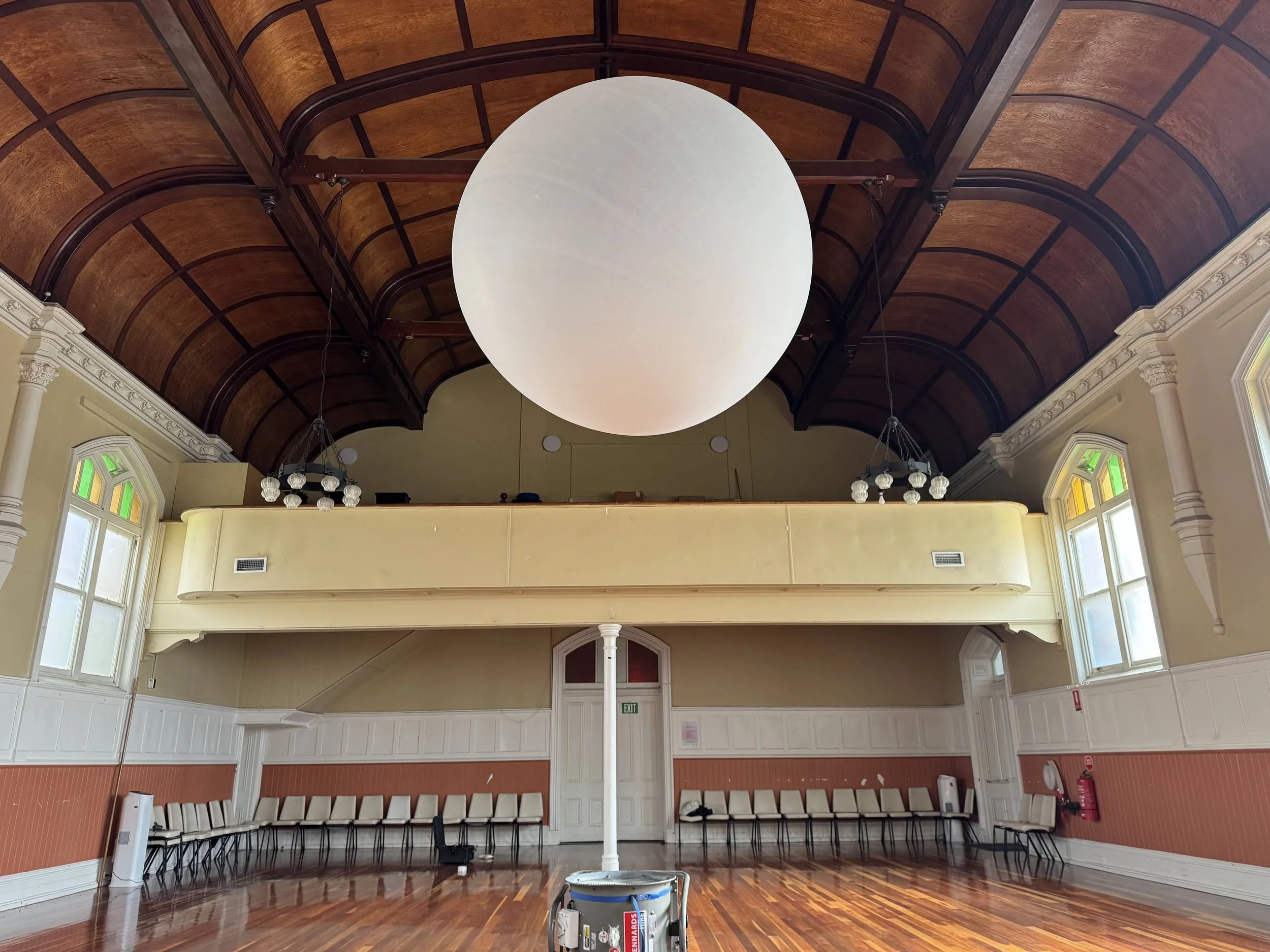
Conceptually, the work addresses a defining preoccupation of our moment - the emergence of artificial superintelligence and its implications for human perception, agency, and meaning. Rather than illustrating this theme didactically, Orbital seeks to evoke it somatically: through scale, sound, darkness, and the visceral strangeness of a massive object hovering in apparent defiance of physical law. The sphere, as a fundamental mathematical form, carries a quiet but undeniable gravitas - at once cosmological and deeply intimate. It functions as a site of contemplation, inviting audiences into a meditative encounter with forces - gravitational, computational, existential - that are ordinarily invisible.